Notice: WP_Block_Type_Registry::register was called incorrectly. Block type names must contain a namespace prefix. Example: my-plugin/my-custom-block-type Please see Debugging in WordPress for more information. (This message was added in version 5.0.0.) in /home/islahcyl/public_html/wp-includes/functions.php on line 5231

Notice: WP_Block_Type_Registry::register was called incorrectly. Block type names must contain a namespace prefix. Example: my-plugin/my-custom-block-type Please see Debugging in WordPress for more information. (This message was added in version 5.0.0.) in /home/islahcyl/public_html/wp-includes/functions.php on line 5231

Notice: WP_Block_Type_Registry::register was called incorrectly. Block type names must contain a namespace prefix. Example: my-plugin/my-custom-block-type Please see Debugging in WordPress for more information. (This message was added in version 5.0.0.) in /home/islahcyl/public_html/wp-includes/functions.php on line 5231

Notice: WP_Block_Type_Registry::register was called incorrectly. Block type names must contain a namespace prefix. Example: my-plugin/my-custom-block-type Please see Debugging in WordPress for more information. (This message was added in version 5.0.0.) in /home/islahcyl/public_html/wp-includes/functions.php on line 5231
Lectures-IBF – Page 2 – Islamic Finance

Product Innovation: Islamic Banks Vs Conventional Banks

Financial Engineering 

Product Innovation: Islamic Banks Vs Conventional Banks

Lecture Sketch

Muhammad Abubakar Siddique

February 10, 2022

………………………………………………………….

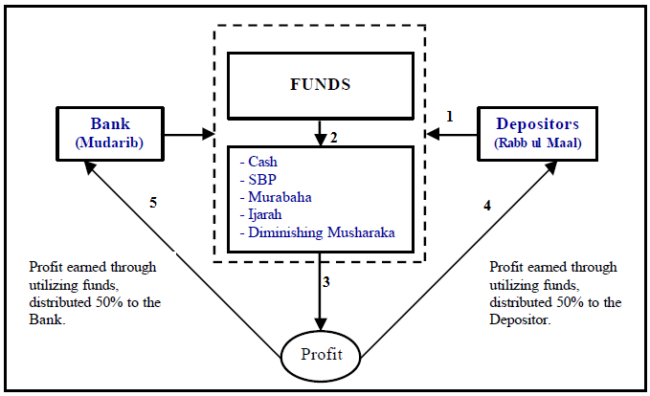
Islamic Banks are more innovative as compare to their convectional counterpart. Conventional Banks (CBs) have only one mode of Loan upon which they engineer their all products and services. In fact, CBs do nothing but manipulate LOAN. Some times they call it current account, some times they name it Saving account, sometime they call it car lease etc. They only have one mode “LOAN”. They build same relationship with their all customers of various products and that is “Creditor-Debtor relationship”. In Deposit side, CBs are debtors and Customers-depositors are creditors and vice versa in Asset side. How can CBs claim that they are innovative!


In fact product innovation exists in Islamic banking where each product is based on different mode. Islamic banks have various modes upon which they engineer their products and services. They do not have same relationship with their customers in all products see following Figure. 


Loading

What is Money Market?

What is Money Market?

            The money market is where financial instruments with high liquidity and very short maturities are traded. It is used by participants as a means for borrowing and lending in the short term, with maturities that usually range from overnight to just under a year. Among the most common money market instruments are Eurodollar deposits, negotiable certificates of deposit (CDs), bankers acceptances, U.S. Treasury bills, commercial paper, federal funds and repurchase agreements (repos).

Money market Instruments:

Here only three major instruments are being defined

1.     Discount Instruments:

            These instruments don’t pay interest as such. They are issued at a discount, which effectively means the “interest” is all at the beginning. Think of it from the lenders viewpoint. They wish to lend $100, but actually only need to lend $80 (discounted at the start) but are paid back the full $100.

  1. Treasury Bills (T-bills) are short-term notes issued by the U.S. government. They are issued at a discount to their face value. They come in three different lengths to maturity: 90, 180, and 360 days. The two shorter types are auctioned on a weekly basis, while the annual types are auctioned monthly. T-bills can be purchased directly through the auctions or indirectly through the secondary market. 
  2. Commercial paper: These are unsecured with a typical term of 30days. There are issued by large organizations with good credit ratings – funding their short term investment needs.
  3. Bankers Acceptance again are issued by companies BUT are guaranteed by a bank. The banks will get a fee for this guarantee – and because the risk is low (for the lender due to the bank guarantee) – the interest the companies offer on these will be low. Again these are offered at a discount however they are negotiable, meaning they can be traded before maturity. These are normally issued by firms who do not have a good enough credit rating to offer commercial paper.
  4. Return Based Tools are financial instrument that earns interest.
  5. A certificate of deposit (CD) is a savings certificate with a fixed maturity date, specified fixed interest rateand can be issued in any denomination aside from minimum investment requirements. Or A CD is a receipt for funds deposited in a bank for a specified term and for a set rate.
  6. A CD restricts access to the funds until the maturity date of the investment. CDs are generally issued by commercial banks.
  7. A repurchase agreement (repo) is a form of short-term borrowing for dealers in government securities. The dealer sells the government securities to investors, usually on an overnight basis, and buys them back the following day. For the party selling the security and agreeing to repurchase it in the future, it is a repo; for the party on the other end of the transaction, buying the security and agreeing to sell in the future, it is a reverse repurchase agreement.
  8. Government Security: A bond (or debt obligation) issued by a government authority, with a promise of repayment upon maturity that is backed by said government. These securities are considered low-risk, since they are backed by the government.


Central Bank’s Requirements from Banks (Conventional and Islamic Banks)

Reserve Requirements: Reserve requirement of banks is to hold liquid assets in the form of cash and, approved securities. SBP requires scheduled banks in Pakistan to maintain two types of reserve requirements, i.e. cash reserve requirement (CRR) and statutory liquidity requirement (SLR).     

  1. Cash reserve requirement (CRR): CRR is the 5 % of banks’ applicable time and demand liabilities (TDLs) that they are required to hold in the form of cash with the SBP on fortnightly average basis. CRR is maintained in current account with the condition of maintain minimum reserve level with the central bank on daily basis. Required level of reserves for a bank in a reserve maintenance period are worked out on the basis of applicable TDLs of that bank at the end of the first day (i.e. Friday) of the maintenance period. Banks are not allowed to carry their excess of reserve position over the next maintenance period. Also, SBP does not remunerate deposits that banks keep with it for meeting the cash reserve requirement. 
  2. Statutory liquidity requirement (SLR): SLR is the 19% for CBs / 14% for IBs liabilities that they are required to invest in approved securities and/or hold in the form of cash; including balances with SBP, with NBP, balances left in the vault of banks, banks’ investment in capital of Micro-Finance Banks (MFBs).

            Like CRR, maintaining period for SLR is also fortnightly that starts from Friday and ends at Thursday of the subsequent week. Applicable Time and demand liabilities at the end of the Friday (i.e. the first day of the maintaining period) are taken into account for the determination of SLR to be maintained during the maintaining period (if Friday is a holiday then time and demand liabilities as of close of the preceding working day is taken into account for calculating the SLR.)

            Increase in SLR ratio implies that banks are required to hold a larger share of their funds into liquid assets approved/notified by the Federal Government for this purpose. Changes in SLR may change the composition of banks’ assets.


Loading

Advance Islamic Money and Capital market

Lecture-1

Part-1: Introduction to Money Market. How does Money market Work in Conventional Economics?

Part-2: Conventional Money market Instruments


Lecture-2

An Introduction to Conventional and Islamic Financial Systems

Reading Link: Chapter-1 of book “Fundamentals of Islamic Money and Capital Markets” published by Wilay

Video lecture link


Lecture-3

Roles, Functions, and Structure of Financial Markets

Reading Link: Chapter-1 of book “Fundamentals of Islamic Money and Capital Markets” published by Wilay

Video lecture link


Lecture-4

SUKUK and Securitization: Some Important Concepts and Prerequisites

Reading Link:  Understanding of Islamic Finance by Muhammad Ayub – Click Here

Suggested clips : No. 1, 2,

Loading

Designing & Pricing of Islamic Products and Services

Lecture -1 

Part-1:   Product Innovation: Islamic Banking Vs. Conventional Banking

Lecture Sketch – Click Here

………………………………………

Part-2: Combination of Contracts: Juristic Theoretical aspect and principles 

Reading Material:

Main Basic Reading: Combination of Contracts by Mohammed Burhan Arbouna 

Supportive reading Urdu article : Combination of Contracts in Islamic Finance by M. Abubakar Siddique


Lecture -2 

Islamic Financial Engineering: Two Contracts in One Contract – Ahdith Only with meanings

Video Lecture


Lecture -3 

Islamic Financial Engineering: Juristic Debate on “Safqah”

Video Lecture


Lecture -4 

AAOIFI Shariah Standard No. 25: Combination of Contracts

Video Lecture


Lecture -5 

Product Development 

Reading Material

Loading

What is Maal in Islamic Economics?

                      What is Maal in Islamic Economics?

Muhammad Abubakar Siddique,

Lecturer, Int’l Institute of Islamic Economics (IIIE),

Int’l Islamic University, Islamabad.

Muhammad.abubakar@iiu.edu.pk

Website: http://islamicfina.com/

November 15, 2021

………………………………………………………………………….

Video Lectures of This Reading 

……………………………………………………………

Definition of Māl

According to Hanfi & Malki jurists, māl is that which is desired by the people and stored for use at a time of need. According to Ibn-Abidin “whatever thing or substance that can be owned and controlled and it can be benefited under normal circumstances. They also define property as a thing that is desired by human nature which can be stored and used when it is needed.

Example: Intangible matters such as knowledge, honor, health, intelligence and are not considered as al-mal. On the other hand, whatever that is normally not beneficial originally like poisonous or spoiled food, meat of dead animals also cannot be considered as al-mal.

Majority of Fiqh Schools (other than Hanafi) – “Whatever thing or substance that has value and if damaged must be compensated”. Thus, the definition of al-mal covers both substance and benefit respectively.

Al-Majallah(Article 126) – “Al-mal is something hat is liked by human nature and it can be stored for later use; and it can be either moveable or immovable”. Definition given by Al-Majallah is more widen since it covers various kind of properties such as perishable commodities 3 , poisons and drugs 4 and potential mal.

Basic features of property

There are three (3) basic features of property (al-mal):
Beneficial – something that human can make use and optimize of it or useful for them.
Valuable – has sentimental value to the owner by deriving certain / specific satisfaction from the property.
Legality – the property must be legal from the eyes of the Shari’ah.


The Concept of Property (Al-Maal) in Al-Qur’an

Al-mal in Quranic verses can simply classify as below:

ƒ Al-mal belongs to Allah as the absolute owner (57:7; 24:33)
ƒ Al-mal itself is good in essence – (2:215; 2:272)
ƒ It is natural for a man to love al-mal – (89:20)
ƒ Al-mal is decoration of worldly life – (18:46; 3:14)
ƒ There are due right of others in your wealth (70:24)
ƒ Al-mal become mal al-shari’ah whenever the sources and the expenditures are permissible (halal) – (4:24)

Types of Māl

Jurists divide types of māl with different respects as follows;


w.r.t Permissibility 

Valuable (متقوم) : All permissible things that has value, owned and controlled by an entity and beneficial from the eyes of the Shari’ah. Example: house, car.

Non-Valuable (غیر متقوم): All things which are not yet in possessions or authority and things that are not allowed by Islamic Shari’ah (such as wine and pork)


w.r.t Mobility 

Moveable (منقول): Hanafi: all permissible properties which are able to be transferred or moved from one place to another place either the process of transformation may maintain the original features of the properties or changing its original shape and form. But Malki consider first one as manqool.

Immoveable (غیرمنقول/عَقار): Hanafi: properties which has value but not transferrable from one place to another place. They restricted the description of immovable property only to the land. Items like building, trees are considered items attached to the land. But to Malki, in addition to Hanafi view, the things which can be moved but will erode/ change its original shape, form and value are also considered ‘aqar.


w.r.t Kind/Genus

Fungible or Similar (Mithlī/مثلی): An article is said to belong to the class of similar (mithlī) if the like of it can be had in the market without there being such difference between the two as people are apt to take into account in their dealings. All permissible things which their replacement can be easily found in the market. They can be commodities that measured by:
– Volume: barley, wheat, dates, etc.
– Weight: cotton, steel, etc.
– Length: yards, inches (yard of plain clothes, etc.)
– Counting due to similar size: egg, nuts, etc.

Non-Fungible or Dissimilar (Qīmī /قیمی): A thing belongs to the class of dissimilar if the like of it is not available in the market or if it be available, it is with such difference between them as people are wont to take into account in fixing the price.


w.r.t Tangibility

Determinate (‘Āyn عین) and Indeterminate (Dain دَین) property

Connected with the division of things into similar and dissimilar is the division of property into ‘ayn that is, specific or determinate and dayn or non-specific or indeterminate property. The chief distinguishing test is when a man is to get certain property from another who either borrowed it from him or took it by force, whether he is entitled to recover it in species or not. If he is, then it is called specific or determinate and if he is not, it is called non-specific or indeterminate.

Articles of the class of similar cannot, as a rule, be recovered specifically, and are thus regarded as dayn or indeterminate property. Hence, gold and silver in the shape of coins or otherwise, grain, oil and the like are dayn or indeterminate property. Therefore, if a man sells an article for one hundred dirhams out of a bag of money pointed out to him by the buyer, he does not become entitled to be paid out of the identical bag but his claim will be satisfied on being paid an equivalent amount. Generally speaking all indeterminate property rests on the mere responsibility or obligation of the person from whom it is recoverable.

ثمن اور دَین

سونے چاندی کے تبادے میں دونوں جانب دَین ہی ہوتا ہے کیونکہ سونا اور چاندی، اور ان سے بننے والے دینار و درہم بلکہ زیورات بھی، شرعاً ثمن ہیں اور ثمن دین ہی کی ایک قسم ہے۔ثمن متعلق بالذمۃ ہوتے ہیں اور اسی لیے دین ہوتے ہیں۔ اسی لیے ہر مال ثمن نہیں ہوسکتا۔ سونا چاندی ہر صورت میں ثمن ہوتے ہیں اور کبھی مبیع نہیں ہوسکتے۔ مال قیمی کبھی ثمن نہیں ہوسکتا ۔ مکیل، موزون اور عددی متقارب مبیع بھی ہوسکتے ہیں اور ثمن بھی لیکن بعض کڑی شرائط کے ساتھ۔ ثمن کی اصطلاح اصل میں “مبیع” کے مقابل آتی ہے۔ اس ضمن میں چند اصول یہ ہیں:
اگر کسی چیز کا تبادلہ سونے/چاندی سے ہوتا ہو سونا/چاندی ثمن ہے اور مقابل چیز مبیع۔
اگر سونے اور چاندی کا آپس میں تبادلہ ہوتا ہو تو دونوں ثمن ہیں، اور ان میں کوئی بھی مبیع نہیں ہے۔
اگر مال مثلی کا مال قیمی سے تبادلہ ہو ، تو مال مثلی ثمن ہے اور مال قیمی مبیع۔
اگر مال مثلی کا تبادلہ مال مثلی سے ہوتا ہو ، تو جس پر “باء” آجائے وہ ثمن ہے اور مقابل چیز مبیع۔


کیا دَین کی صفت صرف سونا چاندی  /دینار و درہم میں ہی پائی جاتی ہے ؟

فقہاے کرام کا موقف یہ ہے کہ اسلامی قانون کے قواعد کی روشنی میں سونا ، چاندی ، یا ان کی مصنوعات – چاہے زیورات ہوں ،یا دینار و درہم – ہمیشہ “دین “سمجھے جائیں گے ۔مال قیمی اور عددی غیر متقارب کسی صورت “دین ” نہیں ہوسکتے ؛ انھیں ہمیشہ اسے “عین ” ہی سمجھا جائے گا ۔ مال مثلی – مکیل ، موزون اور عددی متقارب – عام حالات میں عین ہوتے ہیں لیکن بعض حالات میں یہ دین بھی ہوسکتے ہیں بشرطیکہ ان کی ’’خصوصیات کو ذکر کر دیا  جائے ۔ اس کو فقہاے کرام “موصوف فی الذمۃ” کہتے ہیں ۔


یہا ں ایک سوال پیدا ہوتا ہے کہ کیا دین (بصورت قرض) خود عین ہوسکتا ہے؟
تو اس کا جواب ہے جی نہیں۔ قرض دَین ہی رہتا ہے اور قرض لینے والے پر اس عین کا لوٹانا واجب نہیں ہوتا، بلکہ وہ اس کا مثل/بدل لوٹا سکتا ہے۔ یہ مثل/بدل لوٹانا اس کے ذمے واجب ہے۔ یہی مطلب ہے دین کا۔ عین کا لوٹانا عاریہ میں واجب ہوتا ہے۔ یہی فرق ہے عاریہ اور قرض میں۔ اور اس فرق کی وجہ یہ ہے کہ عاریہ کے نتیجے میں صرف انتفاع کا حق منتقل ہوتا ہے، جبکہ قرض کی صورت میں ملکیت منتقل ہوجاتی ہے۔ اس کی وجہ بھی واضح ہے۔ جو مال قرض دیا جاتا ہے ، خواہ دینار درہم ہوں یا مال مثلی، ان سے انتفاع تبھی ممکن ہوتا ہے جب انھیں ’’کنزیوم‘‘  کیا جائے۔ اس کےلیے ملکیت کی منتقلی ضروری ہوتی ہے۔ اور کنزیوم کرنے  کے بعد اس عین کا لوٹانا ممکن نہیں ہوتا۔نیز قرض پر عاریہ کے احکام کا اطلاق ہوتا ہے اور عاریہ میں مدت کی قید لازم نہیں ہوتی ۔ اس کی دلیل کہ قرض پر عاریہ کے احکام کا اطلاق ہوتا ہے یہ ہے کہ قرض کے لیے ان دو امکانات کے سوا کوئی اور امکان ہے ہی نہیں کہ یہ تو اس پر مال کے تبادلے کے احکام لاگو ہوں جس کے ذریعے کسی شے کی ملکیت اس کے مثل کے عوض دوسرے شخص کو منتقل کی جائے ؛ یا اس پر عاریہ کے احکام لاگو ہوں ۔ پہلے امکان کے ماننے کی کوئی گنجایش نہیں ہے کیونکہ اس طرح یہ کسی شے کی ملکیت اس کے مثل کے عوض دوسرے شخص کو تاخیر کے ساتھ منتقل ہونا بن جاتا ہے اور یہ جائز نہیں ہے ۔ پس یہ متعین ہوا کہ اس کو عاریہ کے اصول کے تحت لایاجائے ۔پس یہ فرض کیا جائے گا کہ گویا قرض لینے والے نے عین سے کچھ عرصہ فائدہ اٹھایا اور پھر وہی عین واپس لوٹا دیا ، اگرچہ درحقیقت وہ اس کا بدل لوٹاتا ہے ۔ پس دیگر دیون کے برعکس عین کے بدل کے لوٹانے کو عین کا لوٹانا فرض کیا جائے گا۔


In the discussion of Loan (Qard) and debt (dain), students do not differentiate qard from dain. In Islamic law, the word “Dain – دین” is used against with “Ain – عین” that refers to the “property” that is legally “determined and specified”. For example, when you make an agreement to buy wheat and the shopkeeper “separates” the required quantity of wheat, that wheat becomes “exact”. Now your right belongs to this “exact” wheat. Seller is not allowed to change it.

دین اور قرض کی بحث میں طلبا دَین اور قرض کا فرق بھول جاتے ہیں ۔ اسلامی قانون میں ’’دین ‘‘کا لفظ ’’عین‘‘ کے مقابلے میں بولا جاتا ہے ۔ عین سے مراد وہ ’’مال‘‘جس کی شرعاً ’’تعیین ‘‘ ممکن ہو ۔ مثال کے طور پر جب خریدار نے گندم خریدنے کا معاہدہ کیا اور دکان دار نے گندم کی مطلوبہ مقدار ’’الگ کرکے‘‘ رکھ دی تو وہ گندم ’’عین ‘‘ ہوگئی ۔ اب خریدار  کا حق اس ’’عین‘‘ سے ہی متعلق ہوگیا ۔خریدار ’’اسی عین‘‘کامالک ہے ۔ تاہم اگر یہ گندم خریدار نے 100 دینار کی خریدی ہو تو 100 دینار’خریدار کے ذمے ‘سے متعلق ہوجاتے ہیں ۔ خریداربعینہ 100 دینار کے  وہی  سکے دینے کا پابند نہیں ہے، بلکہ ان کی جگہ کوئی سے اور  ایک سو دینا ربھی دے سکتا ہے کیونکہ شرعاً دینار اور درہم’’عین‘‘ نہیں ، بلکہ’’دین‘‘ ہیں ۔ آسان الفاظ میں جو چیزآپ نے خریدی وہ تو عین ہے لیکن اس کی قیمت دَین ہے ۔۔۔قرض اور دین سے متعلق اس لنک کو بھی دیکھیں۔۔۔۔دین سے متعلق مندرجہ امور ذہن نشین رکھیں۔

۔۱۔ دین صرف خرید و فروخت سے وجود میں نہیں آتا بلکہ اس کے اور بھی بہت سے اسباب ہیں جن میں ایک سبب “قرض” ہے ۔ اس لیے ہمارے لوگ جہاں کہیں بھی دین کا لفظ دیکھتے ہیں فوراً ہی اسے قرض ترجمہ کردیتے ہیں ، تو یہ غلط ہے ۔ قرض تو دین کے وجود میں آنے کے کئی اسباب میں بس ایک سبب ہے ۔


۔2۔ ہر دین کی ادائیگی مؤخر نہیں ہوتی بلکہ بعض دیون کی ادائیگی فوراً واجب ہوتی ہے ۔ مثال کے طور پر بیع السلم میں جو “راس المال ” ہوتا ہے اس کی ادائیگی مؤخر نہیں کی جاسکتی ، بلکہ بیع السلم کی صحت کے لیے ضروری ہے کہ راس المال کی ادائیگی عقد کے فوراً بعد کی جائے ۔ اسی طرح “عقد ِ صرف” میں دونوں جانب جو مال ہوتا ہے وہ شرعاً دین ہے لیکن ان دونوں دیون کی ادائیگی مجلس ِ عقد میں ہی ضروری ہے ، ورنہ عقد فاسد ہوجائے گا ۔ ایک اور مثال عقد مضاربہ کے راس المال کی ہے جس کی ادائیگی مؤخر نہیں کی جاسکتی ۔ گویا یہ دیون قابل ِ تاجیل / قابل ِ تاخیر ہیں ہی نہیں۔


۔3۔ دین کی وہ قسم جسے قرض کہا جاتا ہے ، مال کے تبادلے کے تحت آتا ہی نہیں ، بلکہ اسے خیرات اور تبرع کے طور پر دیاجائے تو ہی جائز ہوتا ہے ۔ اس لیے اس میں تاجیل کو لازم نہیں مانا جاسکتا ۔


w.r.t Use

Useable (استعمالی) and Perishable/Consumable (استهلاکی) property

All permissible durable commodities which would not perish upon utilization and remain after it is used. Example: car, house, land, book, etc۔  All permissible commodities which would perish upon utilization. It no longer exists once it is consumed or utilized. Example: food, water, petrol, money, gas and etc. Ijarah Contract is executed only in useable property.

……………………………….

Supportive Readings:

Muhammad Wohidul Islam (1999). Al-Mal: The Concept of Property in Islamic Legal Thought, Arab Law Quarterly, Vol. 14, No. 4 (1999), pp. 361-368.

……………………….

نیچے دیے گئے لنک پر کلک کریں اور سبسکرائب کریں ۔

اسلامی معلومات ، روایتی معاشیات ، اسلامی معاشیات اور اسلامی بینکاری سے متعلق یو ٹیوب چینل
https://www.youtube.com/user/wasifkhansb?sub_confirmation=1

Loading

Istijrar in Islamic Finance

                        Istijrar in Islamic Finance – استجرار

Muhammad Abubakar Siddique,

Lecturer, Int’l Institute of Islamic Economics (IIIE),

Int’l Islamic University, Islamabad.

Muhammad.abubakar@iiu.edu.pk

Website: http://islamicfina.com/

November 15, 2021

………………………………………………………………………….

Video Lectures of This Reading 

………………………………………………………………………….

Concept of Istijrar and Sharia starting point

Literal roots of Istijrar are found in ‘Istajarra al Maal,’ (استجر المال) which means ‘to take merchandise by degrees’.

Definition: Istijrar is an arrangement in which someone keeps getting the articles of need from a shopkeeper from time to time, as and when needed, without any offer and acceptance or price bargain between the two.

  There are differences among Sharia scholars on the permissibility of such an arrangement.

                  – Shafi view

                  – Malki view

                  – Hanbali view

                  – Hanfi view

The Shafi view:

  The general opinion of Shafi scholars is that Istijrar is not permissible, as it is a sale arrangement that does not fulfil some basic requirements of a valid sale contract.

A) If one considers that the sale takes place at the time when buyer takes the possession of merchandise, then the sale stands invalid as it is based  on an unknown price.

B) If the view taken is that actual sale takes place when the final accounts of the two parties are settled in the end, then there are again two Sharia problems:

                              (1) the buyer would have consumed the merchandise before the sale is executed; and, therefore,

                              (2) it would mean selling a non-existent merchandise.  

Hence, Shafi school of thought does not permit the use of Istijrar. This is clearly reported in “Almajmoo Sharhul Muhazzib” (المجموع شرح المہذب) by Allama Navavi (RA). 

However, there is at least one notable exception within Shafi scholars. As mentioned by Allama Ramli in “Nihayatul Muhtaj Li rramli” and Allama Shurbeeni in “Mughni al Muhtaj” that Imam Ghazali has granted Istijrar on the basis of ‘Tasamuh’ (or juristic allowance).


The Maliki view:

  Maliki are also of the view that Istijrar is not permissible. Their primary concern is the element of Jahl (ignorance) about the price, no matter it is paid in advance or in the end. This view is reported in “Muatta Imam Malik”.

The Hanbali view: 

  Hanbalis are reported to have a conditional view on the permissibility of Istijrar. According to them, the two parties in such an arrangement agree on settlement price of the merchandise after the buyer has taken its possession and  also consumed it. Such a sale will only stand valid at the time of final price settlement, not at the time of buyer getting possession of the merchandise. However, this settlement price has to be the market price.  ( Moasooatul Fiqh al Islami )


The Hanafi view:

This is actually the Hanafi school of thought that has granted fatwa on the permissibility of Istijrar primarily on the basis of ‘Istihsan’ and ‘Tasamuh’. This view is clearly stated in “ Durre Mukhtar Maa Ruddul Mukhtar ”.

Allama Ibn-e-Nujaim, in “Al Bahr ul Raiq ” also talks about the permissibility of ‘Bay al Istijrar’ in the following words:

  “The type of sale that Hanafi scholars have permitted on grounds of ‘Tasamuh’ is the one in which people customarily get the articles of routine household needs, like pulses, salt, oil etc., from a shopkeeper without actually buying them at the time of taking possession. Then people trade these things after having used them. This is a correct arrangement and the trade of ‘non-existent’ is permissible in it”

 So, to Hanafi scholars, Istijrar is permissible on the basis of ‘Istihsan’. There are, however, certain differences on the state of reasoning for ‘Istihsan’ among the Hanafi scholars.

What is the rationale of Istijrar?

Usual practice in Istijrar is that price of the merchandise is paid towards the end when the two parties settle their accounts. Now if, at the time of getting merchandise, the price is completely unknown then the arrangement may lead to dispute between the two. Therefore, such an arrangement remains Fasid (vicious) until the settlement of accounts towards the end. Only at this point, the arrangement becomes Sharia-compliant.

Some scholars say that such an agreement between the two, at the end, will make it similar to a sale contract. But the problem with it is that, by the settlement time, buyer would have consumed all or most of the merchandise. How can a sale contract be executed on something that does not exist anymore?

Other scholars, in reply, have stated that such a sale is legitimate on the basis of Urf (common practice) and Istihsan. Yet, the difficulty is that, in such a case, buyer would be consuming things that haven’t entered his ownership and neither have they been traded. This is taken care of by the argument that because this use of merchandise by the buyer has been with the permission of seller, so consumption of merchandise before the settlement date is permissible.

Hanafi:

Hanafi considers Istijrar as a sale contract .Hanafi response to ambiguity about the sale of a non-existent object is that the sale, in case of Istijrar, is actually of something from which the buyer has completely benefited. It is this benefit that has lead the object to a state of being non-existent at the end of the contract period.

The fundamental reason for prohibition of sale of non-existent object is the presence of Gharar, as sometimes seller is unable to provide the object of sale to the buyer due to its non-existence in the first instance. In case of Istijrar, however, not only the merchandise existed at the beginning of the contract period, but also seller has already passed the ownership of it to the buyer. This particular fact eliminates any possibility of Gharar in Istijrar.

In reply to the doubt of some scholars about the use of merchandise by the buyer without seller’s permission, Hanafi states that at the settlement time (when the sale stands valid) the validity of sale will be referred to the time of sale contract when buyer took the possession of merchandise. It will be considered that buyer has been using something he had already become owner of due to Istijrar contract.

Hanafi compares this with another situation in which a Ghasib (the oppressor غاصب)  is not allowed to benefit from the objects acquired by the way of oppression. But if he pays for the Daman (price) of these things, then he becomes the owner of it and time of ownership is then referred to the time of oppression through which he acquired the goods in question.

Hanafi’s argument is that if a Ghasib (غاصب) can become the owner of an unjustly acquired good, by paying for its price, then why should it not be the case for Istijrar? Not to forget, the seller’s permission to use the merchandise by way of Istijrar ensures that the buyer is free from any sin, unlike in case of Ghasb (غصب) whereby the Ghasib (غاصب) has also committed a sin.


Types of Istijrar

There are two types of Istijrar:

  1. A) Istijrar with deferred payment
  2. B) Istijrar with advance payment

A) Istijrar with deferred payment:

It is an arrangement in which someone keeps getting the articles of need from another person from time to time, as and when needed, without any offer and acceptance or price bargain between the two. The price is paid at the end when the contract is concluded and accounts are settled. The following points are important in such a type of Istijrar:

a) If the seller tells the buyer the selling price of merchandise, at the time of buyer getting possession of it, then the sale is valid every time buyer takes the possession. It is simply a case of deferred payment sale.

b) If the seller does not tell the buyer the price of merchandise, every time the buyer takes its possession, but the contracting parties understand that the sale is being executed at the market price, which is determined and known in a manner that there is no possibility of change in it or dispute, then the sale stands valid every time buyer takes possession of the merchandise.

c) If, at the time of possession of merchandise, its price was not known or the two parties agreed that the sale will be executed at the marker price, but if it is difficult to determine a mutually agreeable market price, owing to large variations in the market price, then the sale is not valid at the time of the possession. Rather it will stand valid at the time of the settlement of accounts (after agreeing to a market price) and its validity will be referred to the time of possession, ex post.


B) Istijrar with advance payment:

  It is an arrangement in which someone keeps getting the articles of need from another person from time to time, as and when needed, without any offer and acceptance or price bargain between the two. The price is paid in advance by the buyer to the seller and accounts are settled towards the end of the contract period. This type of Istijrar has two important Sharia aspects to ponder further on.

a) Will price of merchandise be known or unknown to the parties ?

b) what will be the rationale of advance payment made here?


a)Will price of merchandise be known or unknown to the parties ?

First possibility : One possibility is to consider this advance sum as the price-paid-in-advance. For such a possibility Sharia stipulates two conditions:  

      1) At the time of price payment, the exact kind of merchandise, its features and the quantity all must be known.

      2) The merchandise must be of a type on which Salam or Istisna sales can also be executed and the Istijrar contract must have fulfilled the respective Sharia requirements of either of these two types of sales. Incidentally in practice,

Note: however, both of the above conditions are not observed in case of Istijrar.


Second possibility : The 2nd  possibility is to consider that the payment made by buyer to the seller is an Amana (deposit). This will mean that the seller can not consume this money for his own needs. It is, however, practically very difficult as sellers usually don’t keep it separate. Rather, all they do is to keep an account of this money while benefiting from its use.

Third possibility : Finally, one may consider this sum as a loan extended by buyer to the seller by virtue of which he can use this amount for his own purposes. But, the ambiguity here is that this will be a kind of loan that is conditional upon the future expected sale between the two parties. Such a condition is against the requirements of a loan contract.

b) Shaikh Usmani suggests a different rationale for this advance sum. In his view, such an amount should be considered “on account.”. In Fiqhi terms, an amount given “on account” is a special kind of loan that permits an adjoined sale. So, this is a loan with a sale condition introduced in it. Hanafi scholars consider such introduction of a condition permissible.

……………………….

نیچے دیے گئے لنک پر کلک کریں اور سبسکرائب کریں ۔

اسلامی معلومات ، روایتی معاشیات ، اسلامی معاشیات اور اسلامی بینکاری سے متعلق یو ٹیوب چینل
https://www.youtube.com/user/wasifkhansb?sub_confirmation=1

Loading

Risk in Islamic Finance

                        Risk in Islamic Finance

Muhammad Abubakar Siddique,

Lecturer, Int’l Institute of Islamic Economics (IIIE),

Int’l Islamic University, Islamabad.

Muhammad.abubakar@iiu.edu.pk

Website: http://islamicfina.com/

Oct. 28, 2021

………………………………………………………………………….

Video Lectures of This Reading 

………………………………………………………………………….

What is Risk?

In finance and banking, risk is defined as the likelihood that one would receive a return on an investment that is different than what one had expected.  Therefore, risk does not only include the possibility of making low than expected returns but also includes the possibility of making higher than expected returns. The probability of making a lower return is also referred to as downside risk and the probability of making a higher return is referred to as upside risk. Therefore, there are two risk outcomes: on the upside as well as on the downside.


Risk is also defined as uncertainty or the possibility that the actual return (from holding an asset such as a loan by a financial institution) will deviate from the expected return. The greater the deviation and the higher the probability of the occurrence, the higher is the risk. Risk is also defined as an exposure that can create volatility in the value of business. Risk is also defined as the adverse impact on profitability caused by several distinct sources of uncertainties and the potential variability in future cash flow.

It is apparent that risk and uncertainties have been used interchangeably to denote potential losses arising from an exposure, e.g., in making a loan or murabahah.

 In general, one can differentiate risks from uncertainties by saying that risks can be measured while uncertainties are not measurable. Risk in business is the possibility that an expected outcome does not materialize.  For  example,  a  construction  firm  expects  with  GDP  growth  at  5%  next  year projected a profit of $ 100 million, but the GDP contracted to -2% instead and the firm realized a $ 30 million loss.

As stated in the above, there are many ways of defining risk. Some see risk as bad as it is often seen to result in losses while others look at it as opporties to make gains. In general, risk is defined as potential losses. In statistics, risk is the deviation from the mean. It is also defined as the probability of a negative outcome, variance or standard deviation around the expected return, or a shortfall probability. The greater the variability or dispersion in the possible outcome, or the broader the range of possible outcome, the greater is the risk. For example, when the mean or average income from an investment is $ 3,000 per annum while the standard deviation is $ 500, this means the highest income the individual in the sample earns is $ 3,500 (i.e., $ 3,000 + $ 500) and while the lowest income is $ 2,500 (i.e., $ 3,000 – $ 500). At a similar level of income but with a higher standard deviation of $ 1,000, the highest possible income is $ 4,000 (i.e., $ 3,000 + $ 1,000) and the lowest is $ 2,000 (i.e., $ 3,000 – $ 1,000). In this way, an investment that generates profit with a higher standard deviation is more risky than one with a lower standard deviation.


How one defines risk depends on what business he is dealing with. If the business deals with the real-sector such as manufacturing, the firm faces business risk. It can lose money when price of goods drop below costs or price of inputs increases dramatically. When an individual invests in stocks, he is also facing market risk as a collapsing stock market will eat away his capital. If he makes a loan or buys a bond, he faces risk of default or credit risk. These risks have something in common as they constitute potential losses.


“Al-ghonm bil ghurm” meaning that “with risk comes profit”

This legal maxim asserts that profit can only be acquired by the taking of risk. The behavior is in direct contrast to riba where the taking of risk is absent from the receipt of surplus out of a loan. The practice of riba allows capital to increase without possibility of decrease, while al-bay allows capital to increase or decrease based on market conditions and systemic events. The former is therefore unjust in Islamic perspective while the latter is just and equitable. This principle requires one to risk his capital in order to enjoy gains. When an individual earns profit without risking his capital, it is likely the counterparty is treated unfavourably in the contract. For example, in contract of a sale, the trader is risking his capital by virtue of holding ownership of commodities. Failure to sell above cost price will mean losses and capital depreciation to the trader.


RISK-TAKING OR RISK ACCEPTING BEHAVIOUR

While giving and receiving of riba is prohibited in Islam, risk behaviour has not received adequate attention by Shari’ah scholars at the supervisory level relative to the law of contract in fiqh muamalat. Hence, it is not difficult to notice that Shari’ah principles in Islamic finance are confined to matters related to contracts (‘uqud). For example, valid contracts must be free from riba, gharar, gambling and impure commodities. Risk behavior in Islamic finance and contracts, in particular, has never received the attention it deserves, which is very unfortunate. The jurists have instead focus on risky sales under the pretext of gharar, which is again an element in contract agreement which contracting parties must avoid. However, gharar and ghurm are two distinct parameters in Islamic finance. The former is one form of unsystematic risk while the latter is a systematic risk.


GHARAR (RISK IN CONTRACT)

Note: In video Lecture, I have discussed Gharar differently but in detail which is not available here.

Bank risk management in general is related to uncertainties in future outcome. But when the term risk is defined as gharar, one is referring to risk in contract where it deals with the uncertainties or ambiguities concerning the pillars (akrah) of contract. For instance, sales such as bay al-muzabanah and bay al-samak fi’l-maare banned in Islam because both contain gharar. Sometimes, gharar is called khatar, taken from the mukhatara sale. The purchase of life insurance policy is prohibited in Islam because it is said to contain gharar. When one sells something he does not own, ghararin ownership is said to exist in the sale agreement. As mentioned earlier, contracts containing ghararare declared null and void. Sales involving nonexistent objects, or the non-stipulation of terms of payments is invalid on grounds of gharar.

In a contractual agreement, gharar must be avoided because when it exists, there is a possibility that one of the contracting parties in the deal may lose out. What this means is that market participants must not allow ambiguities to exist when the contract is in effect. The legal maxim “harm must be eliminated” (al-darar yuzul) explains the basic justification for the prohibition of gharar in contracts.

Islamic jurists (fuqaha) have made it clear that any contract is deemed null and void when gharar is evident. When gharar in contractual obligations occurs, contracts can no longer be operative. The contract will become invalid and neither party shall receive legal protection when a dispute arises. For example, when a person sells an asset he does not own, or does so when the asset is not yet in his possession, there is a possibility he may fail to make the delivery. In this manner, the transfer of ownership rights cannot be executed as planned.  Gharar is caused by human choice but it can be controlled. Hence, it is one form of unsystematic risk. For example, a deliberate action not to declare a price during a sale can lead customers to pay more than they should. But gharar can be eliminated when the trader decides to put the price label. Selling fish in the water is a transaction fill with gharar about delivery and hence the true value of the sale. Using gharar to serve one’s end is destructive, which can harm others as it is close to deception (taghrir). Hence, gharar must be avoided at all costs as it will create dispute. According to Ibn Qayyim, when people quarrel and fight unnecessarily, they will be distracted from remembering God.

The harmful impact of gharar in contracts takes shape in the form of Shari’ah non-compliance risk. In the event where gharar is evident in the ownership of the asset, cancellation of a contract will produce adverse impact on bank earnings.

RISK IN BUSINESS OUTCOME (GHURM)

Elsewhere, Islam enjoins market agents to take risks in their business engagements. In fact, the Islamic legal maxim such as “no reward without risk” (al-ghurm bil ghunm) is invoked to invite people to participate in business involving both risks and reward such as al-bay, ijarah, salam, mudarabah and musharakah. Legitimate profit generated from commercial activities implicating elements of risk-taking is a virtue (mahmudah) in Islam.

Risk in business outcome (ghurm) can be explained by examining the nature of caravan trade before and after Islam in Mecca. The Qur’an described the caravan trade in the following verse:

“For the familiarity of the Quraish, their familiarity with the journeys by winter and summer let them worship the Lord of this House, Who provides them with food against hunger, and with security against fear of danger.”(Al-Quraish: 1-4)

In essence, two types of commercial contracts can be observed in the caravan trade, namely mudarabah and al-bay. In the former, the Meccans are known to wait for the arrival of the caravan with full expectations of profit as they have invested their money in the caravan trade via mudarabah or al-qirad. Indeed arrival of caravans is a big occasion in the city. It is a festive occasion and people were excited about the caravan they have invested in. The caravan trade is by no means easy and smooth. The goods can be destroyed before reaching the markets. Sandstorms and sickness were common during the expeditions. Highway robbery and freak accidents may complicate the journey. These incidences are beyond one’s control. These are risks that caravan trading cannot avoid. Upon arrival at the destination, there is again no guarantee that the merchants can sell their goods at the intended price; hence in total the business outcome of the caravan trading is unknown. There is no guarantee that the merchants can recover their capital or make enough profit from the trade expedition.

When the Qur’an says’ “Allah allows trade but prohibits riba.” (Al-Baqarah: 275), it (i.e., the Qur’an), in principle, is enjoining a risk-taking or risk accepting attitude towards business. Risk-taking is a position taken by the business that exposes it to the law in nature that may be harmful to the organisation but it is pursued to establish fairness and justice as the outcome of business is unknown by man. For this reason, no counterparties should be put in a position to guarantee capital protection and receive fixed contractual profit. For example, in a trading business, the seller is risking his capital since the sale does not guarantee that capital is protected from market volatilities. The business can either make a profit or suffer a loss, hence capital is at risk. This is the essence of the “al-ghorm bil ghunm” and “al-kharaj bil daman”where profit is made by way of risking one’s own capital.

Based on the above, one can now distinguish ghararfrom ghurm.  Ghararis destructive while ghurmis constructive. Profiting from ghararis unjustified enrichment as it (i.e., gharar) leads to unfair and unethical dealings. On the contrary, profits created under the pretext of ghurm show the way to justice since these profits are made by way of mutual aid and cooperation (ta’awun).


Risk Taking and Risk Sharing

As a business, al-baycan easily magnify risk behaviour in two ways. Firstly, al-bayas the business entity requires capital expenditure, which can be acquired using the mudarabah and musharakah system, thus amplifying the risk-sharing relationship. Secondly, the business activities the company is involved in can be as trader, manufacturer and service provider. This means that the company is dealing with final customers or end-users and thus, risk-taking behavior is more relevant here. While the company is taking risk with its capital in the effort of generating earnings, it does not share risks with the customer.

In the final analysis, risk-sharing and risk-taking are basically two sides of the same coin. The former involves mobilizing capital while the latter deals with the business operations that creates cash flows. This is the true meaning of al-baythat the Qur’an intended to convey as opposed to riba. When economies under financial turmoil are looking for an alternative to interest-based debt financing, embracing Islamic risk behaviour in both forms (i.e., risk-taking and sharing) can be the winning option. It is for this very reason that Allah has permitted al-bay but prohibits riba.


Risk-Taking Behavior

While Islam enjoins people to take risk, the people will take risks based on their respective risktolerance attitude. These are:

  1. Risk-averse – Risk aversion is an expression of one’s preference for certainty over uncertainty which leads people to take more risk when the expected return is higher. A risk-averse person does not like risk; hence he would prefer a low rate of return over a high rate of return that carries higher risk. Risk-averse behaviour will lead people to make choices by putting unwarranted weight on the dangers ahead in contrast to the expected return. Risk-aversion which leads one to demand an investment that guarantees both capital and profit is a prohibited act in Islam under the pretext of riba. However, Islam recognises that some people do not like risk and Islamic contracts such as wadi’ah yad dhamanah is used as bank deposits instruments to cater to such needs, such as the provision of capital protection.
  2. Risk-neutral – A risk neutral person takes a given level of risk and is indifferent to the amount of return he may receive as he does not worry about risk. This person would possibly invest in mutual funds or trusts that are managed by professional fund managers.
  3. Risk-lover – A risk-loving person will take more risk even though the return could be unattractive. He has a preference for risk. A risk-loving attitude, if left without control, may lead to gambling, which is prohibited in Islam.

Risk-Avoiding Behavior

If capital is preserved but the owner of capital demands a contractual return from its use, this behaviour is tantamount to riba. However, risk-avoiding behaviour meant to protect capital is allowed in Islam as long as it does not contract a fixed return. This is possible under the contract of wadi’ah yad dhamanah. Risk-avoiding behaviour that runs against the principle of “al-ghonm bil ghurm” is condemned in Islam. Hence, any contract that guarantees capital protection and fixed contractual returns is prohibited.


Summary

  • Like conventional risk management, Islamic risk management deals with risks and uncertainties of business outcomes. Islam does not allow risks in contractual obligations (gharar) but acknowledges the presence of the risks in the outcome of business and investment activities (ghurm)
  • Because man cannot predict the future with precision, variation in business outcomes constitutes the risk they cannot avoid. However, man can strive hard to manage these risks to minimize adverse impacts.
  • Risk (ghurm) in business activities can means two things, namely, business risk and financial risk. The former deals with price, regulatory, operating, commodity, human resources, legal and product risks while the latter refers to credit, liquidity, currency, settlement and basis risk.
  • Business risk is a law in nature (hukm tabi’i) in which its outcome is only known by God with precision. This is also known as systematic risk and man cannot control business risk. The opposite is true for financial risk, also called unsystematic risk which can be mitigated.

……………………….

نیچے دیے گئے لنک پر کلک کریں اور سبسکرائب کریں ۔

اسلامی معلومات ، روایتی معاشیات ، اسلامی معاشیات اور اسلامی بینکاری سے متعلق یو ٹیوب چینل
https://www.youtube.com/user/wasifkhansb?sub_confirmation=1

Loading

Economic Capital and Regulatory Capital

                        Economic Capital and Regulatory Capital

Muhammad Abubakar Siddique,

Lecturer, Int’l Institute of Islamic Economics (IIIE),

Int’l Islamic University, Islamabad.

Muhammad.abubakar@iiu.edu.pk

Website: http://islamicfina.com/

Oct. 28, 2021

………………………………………………………………………….

Video Lecture of This Reading 

………………………………………………………………………….

Economic Capital

The size of economic capital of a bank serves as a shield against unexpected losses (UL). Economic capital requirements seek to ensure that risk exposures of a banking institution are backed by an adequate amount of high quality capital which absorbs losses on a going concern basis.

Economic capital is calculated internally by the financial institution based on its business model and strategies it adopts and hence the types of exposures it has.

This ensures the continuing ability of a banking institution to meet its obligations as they fall due while also maintaining the confidence of customers, depositors, creditors and other stakeholders in their dealings with the institution. Capital requirements also seek to further protect depositors and other senior creditors by providing an additional cushion of assets that can be used to meet claims in liquidation. Liquidity cushion or cushion of assets can also be known as a “rainy day fund.”

Economic capital is used for measuring and reporting market and operational risks across a financial organization. Economic capital measures risk using economic realities rather than accounting and regulatory rules, which have been known to be misleading. As a result, it is thought to give a more realistic representation of a firm’s solvency.


Regulatory Capital

Capital requirement (also known as Regulatory capital or Capital adequacy) is the amount of capital a bank or other financial institution has to hold as required by its financial regulator. So it is determined externally by regulators like SBP, BASEL. This is usually expressed as a capital adequacy ratio of equity that must be held as a percentage of risk-weighted assets. These requirements are put into place to ensure that these institutions do not take on excess leverage and become insolvent.

CAR = Capital / (Risk-weighted asset);

CAR = Capital / Asset x RW

……………………….

نیچے دیے گئے لنک پر کلک کریں اور سبسکرائب کریں ۔

اسلامی معلومات ، روایتی معاشیات ، اسلامی معاشیات اور اسلامی بینکاری سے متعلق یو ٹیوب چینل
https://www.youtube.com/user/wasifkhansb?sub_confirmation=1

Loading

Tawarruq & Commodity Murabaha

                        Tawarruq and Commodity Murabahah

Muhammad Abubakar Siddique,

Lecturer, Int’l Institute of Islamic Economics (IIIE),

Int’l Islamic University, Islamabad.

Muhammad.abubakar@iiu.edu.pk

Website: http://islamicfina.com/

Oct. 28, 2021

………………………………………………………………………….

Video Lecture of This Reading 

………………………………………………………………………….

Note: Before understanding you must have the concept of Buy-Back (Bay’ Inah) – Click here 

………………………………………………………..

Monetization

Monetization refers to the process of purchasing a commodity for a deferred price determined through Musawamah (Bargaining) or Murabaha (Mark-up Sale), and selling it to a third party for a spot price so as to obtain cash.

Tawarruq is a transaction whereby a person who is in need of money, buys a commodity on credit from certain person, and then sells it in market on cash at a price less than the one at which he purchased from its owner. It is called Tawarruq because the purpose of this transaction is to obtain wariq (silver) i.e. money or finance by a needy person. For example, A is in need of Rs. 20,000. He approaches B with the request to sell him certain commodity on credit. B sells him a computer worth Rs. 20,000 for Rs. 30,000 on credit to meet his immediate need of money. A sells it in market on cash for Rs. 20,000 and gets money. He is indebted to B for Rs. 30,000.

The classical Muslim jurists have divergent views about its legal status. A considerable number of Muslim jurists hold it invalid. In their opinion, the motivating cause of the transaction is to get loan against certain increase. It is a subterfuge and a legal device to obtain money against a certain increase. Besides, it is an exchange of money for money with surplus from one side.


Maliki Viewpoint

Maliki School holds Tawarruq invalid. The authoritative Maliki text “Mukhtasar Khalil explains Maliki Position on Tawarruq. The author writes:

“If a person asks the other: Lend me eighty and I will return to you one hundred”. The other person says: It is not lawful but I will sell you a commodity worth eighty for one hundred”.


Hanafi Viewpoint

Hanafi School has two divergent positions on Tawarruq.

 1. Al-Zayla’I (d.743) identifies tawarruq as bay al-Inah and disallows it. He says:

The form in which Bay’ al-Inah is practiced is that a needy person approaches a merchant and requests him to lend him some money. The merchant wants to earn from the transaction, but at the same time, he does not want to be indulged in Riba. So, he sells him a cloth worth ten for fifteen on credit, so that person could sell it for ten (which is the real value of cloth), on cash and meet his need. This is unlawful and reprehensible”. (Tabyin al-Haqa’iq vol. 4, p.89)

2. Ibn Humam (d.861), another Hanafi jurist, allowed it though considered it less preferable. (Ibn Humam, Sharh Fath al-Qadir, vol. 7, p. 212 & 148. See also Radd al-Muhtar. Vol.5, p.325-326)


Shafi’i Viewpoint

Shafi’i jurists emphasis that external form of contract should be according to the requirement of Islamic law. They are not concerned with the underlying intention (Rawadah al-Talibin, vol. 3, p. 416). From this, it can be concluded that they acknowledge the validity of Tawarruq.


Hanbali Viewpoint

Hanbali scholars hold Tawarruq valid. Al-Mardawi, a renowned Hanbali jurist writes:

“If a person needs cash, and for that purpose he buys a commodity whose value is hundred for hundred and fifty, it is lawful. This is the ruling of Imam Ahmad” (Al-Mardawi, Kitab al-Insaf, vol. 4, p.337).

Hanbali jusirts generally regard tawarruq permissible. Imam Ibn Taymiyyah and Imam Ibn al-Qayyim, two prominent Hanbali scholars, however, do not agree with the acknowledged viewpoint of their school. They equate Tawarruq with Bay’ al-Inah (buy-back agreement) (I’lam al-Muwaqqi’in, vol. 5, p. 86; al-Fatawa al-Kubra, vol. 19, p. 302)

Those who approve of Tawarruq rely on the texts that permit sale such as the verse: Allah (SWT) has permitted Bai´ and forbidden Riba (al-Baqarah 2: 275). They, however, lay down certain conditions for its validity. These are:

(i) There is a real need for transaction. The person undertaking Tawarruq needs money and he is unable to get loan from any source. However, if he can get loan, then he is not allowed to enter Tawarruq.

(ii) The contract in its form should not be similar to a Riba contract. This occurs where the seller expressly mentions that he is selling a commodity worth one thousand (which is the real price) for twelve hundred, because this amounts to exchange of money for money with excess. It is, however, lawful if he apprises the prospective debtor of its real price and his profit margin.

(iii) The debtor (buyer of commodity) should not sell it before taking its possession.

(iv) The commodity should not be sold to the same creditor (seller in this case) at a less price.


Shari’ah Advisory Council of Bank Negara Malaysia

Resolution: Deposit Product Based on Tawarruq

The SAC, in its 51st meeting dated 28 July 2005, has resolved that deposit product based on Tawarruq is permissible.

Resolution: Financing Product Based on Tawarruq

The SAC, in its 51st meeting dated 28 July 2005, has resolved that financing product based on the concept of Tawarruq is permissible.

(Shari’ah Resolutions in Islamic Finance: Item 60 -61)

The Fiqh Academy of Muslim World League in its 15th session had also allowed Tawarruq with certain conditions. It, however, reviewed its fatwa in its 17th session and declared current Tawarruq practices by the Islamic banks invalid.

OIC FIqh Academy Resolution 179 (19/5)

Tawarruq: its meaning and types (classical applications and organized Tawarruq)

The International Council of Fiqh Academy, which is an initiative of the Organization of Islamic Conferences (OIC), in its 19th session which was held in Sharjah, United Arab Emirates, from 1 – 5 of Jamadil Ula 1430 AH, corresponding to 26 – 30 April 2009, decided on the following:

Having reviewed the research papers that were presented to the Council regarding the topic of Tawarruq, its meaning and its type (classical applications and organized Tawarruq), a resolution was passed. Furthermore, after listening to the discussions that revolved about the applications of Tawarruq, the resolutions were presented at the International Council of Fiqh Academy, under auspices of the Muslim World League in Makkah.

The following were the resolutions:

First: Types of Tawarruq and its juristic rulings:

Technically, according to the Fiqh jurists, Tawarruq can be defined as: a person (mustawriq) who buys merchandise at a deferred price, in order to sell it in cash at a lower price. Usually, he sells the merchandise to a third party, with the aim to obtain cash. This is the classical Tawarruq, which is permissible, provided that it complies with the Shari’ah requirements on sale (bay’).

The contemporary definition on Organized Tawarruq is: when a person (mustawriq) buys merchandise from a local or international market on deferred price basis. The financier arranges the sale agreement either himself or through his agent. Simultaneously, the mustawriq and the financier execute the transactions, usually at a lower spot price.

Reverse Tawarruq: it is similar to Organized Tawarruq, but in this case, the (mustawriq) is the financial institution, and it acts as a client.

Second: It is not permissible to execute both Tawarruq (Organized and Reversed) because a simultaneous transaction occurs between the financier and the mustawriq, whether it is done explicitly or implicitly or based on common practice, in exchange for a financial obligation. This is considered a deception, i.e. in order to get the additional quick cash from the contract. Hence, the transaction is considered as containing the element of Riba.

The recommendation is as follows:

To ensure that Islamic banking and financial institutions adopt investment and financing techniques that are Shari’ah-compliant in all its activities, they should avoid all dubious and prohibited financial techniques, in order to conform to Shari’ah rules and so that the techniques will ensure the actualization of the Shari’ah objectives (maqasid Shari’ah). Furthermore, it will also ensure that the progress and actualization of the socioeconomic objectives of the Muslim world. If the current situation is not rectified, the Muslim world would continue to face serious challenges and economic imbalances that will never end.

To encourage the financial institutions to provide Qard Hasan (benevolent loans) to needy customers in order to discourage them from relying on Tawarruq instead of Qard Hasan. Again these institutions are encouraged to set up special Qard Hasan Fund.

AAOIFI

According to AAOIFI Shariah Stranded no. 30, article 4/5 stated that “commodity (object of Tawarruq) must be sold to a party other than the one from whom it was purchased on a deferred payment basis (a third party) so as to avoid Inah”

This standard makes it very clear that Tawarruq cannot be fictitiously transacted with the cosmetic involvement of a third party. It should be ensured that the goods being traded are genuinely moved from seller to buyer. If there is any trick (hilah) involved, then the transaction would be deemed as a hilah to avoid the prohibited Riba, which resemble the character of Inah.

In commodity Murabaha the transacting parties operate a netting facility between their different storage felicities and in reality the commodity rarely gets physical transferred from seller to the buyer as it should under the requirement of the Shari’ah. For example in the local goods like a car, the bank buys the car from the exhibition centre. The bank then sells it to the customer on credit. Then, the customer appoints the exhibition centre to sell the car. The car will then be sold by the exhibition centre to the bank. Then, the bank will resell it to another customer. This is how papers of the cars rotate various times among the bank, the customer and the exhibition centre, while the car remains in its place, without moving a single inch. To confirm this transaction is the exchange of money for money. The goods only entered it by deception.


……………………….

نیچے دیے گئے لنک پر کلک کریں اور سبسکرائب کریں ۔

اسلامی معلومات ، روایتی معاشیات ، اسلامی معاشیات اور اسلامی بینکاری سے متعلق یو ٹیوب چینل
https://www.youtube.com/user/wasifkhansb?sub_confirmation=1

Loading