Global Islamic Finance & Investment Insights
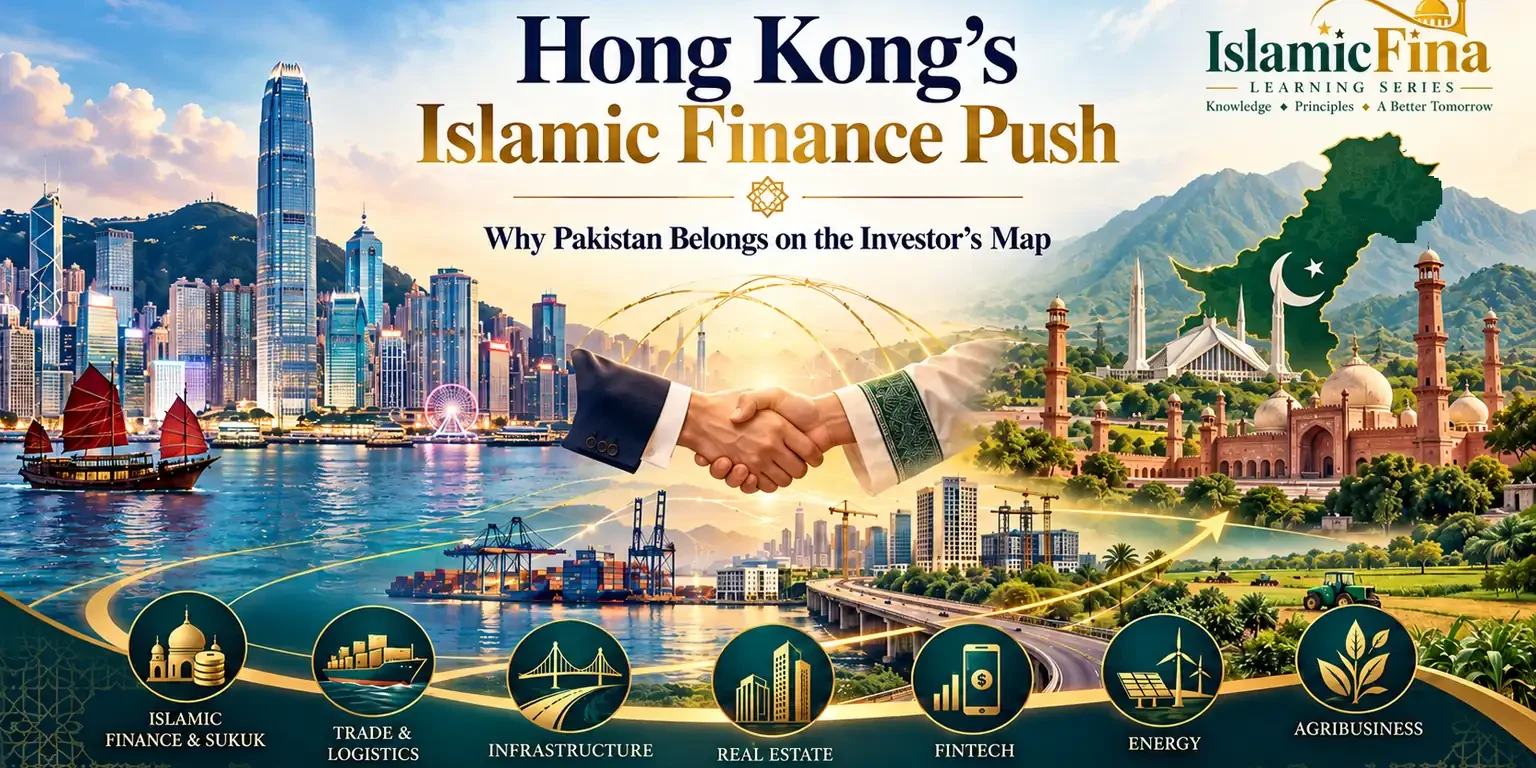
Hong Kong’s Islamic Finance Push: Why Pakistan Belongs on the Investor’s Map
As Hong Kong strengthens its engagement with international Islamic finance, Pakistan is one market that deserves greater attention from its investment community.
With an established Islamic banking industry, an active Sukuk market, developing investment products and opportunities for productive business financing, Pakistan offers an interesting destination for investors seeking to explore new markets.
Hong Kong’s Renewed Islamic Finance Ambitions
On October 2, 2026, the Hong Kong Monetary Authority (HKMA) and Bank Negara Malaysia (BNM) held a high-level meeting. Their official announcement highlighted stronger cooperation in financial technology, payment systems, capital-market connectivity and Islamic finance.
The Islamic finance agenda includes industry engagement, professional development, sustainable finance and cross-border investment.
Hong Kong’s engagement with Islamic finance is not new. Following earlier cooperation with Malaysia, it introduced Sukuk-friendly tax reforms in 2013 and issued three sovereign Sukuk in 2014, 2015 and 2017, each worth US$1 billion.
These initiatives demonstrated Hong Kong’s ability to accommodate Islamic financial instruments. The renewed cooperation could provide additional momentum for developing international Islamic investment activities.
For investors considering opportunities beyond established financial markets, Pakistan presents an interesting possibility.
Why Pakistan Deserves Investors’ Attention
Pakistan’s Islamic finance sector has become a significant component of its financial system.
According to the Pakistan Economic Survey 2025–26, approximately PKR 2.25 trillion in bids were accepted through Government Ijarah Sukuk and related Bai-Muajjal auctions during July 2025–March 2026.
During the same period, the Securities and Exchange Commission of Pakistan (SECP) issued Shariah-compliance certificates relating to corporate Sukuk amounting to approximately PKR 229.6 billion.
Furthermore, Shariah-compliant securities represented approximately 64% of Pakistan Stock Exchange market capitalisation as of March 31, 2026.
These figures demonstrate the scale of Pakistan’s domestic Islamic financial market. Although domestic market development does not automatically ensure international accessibility, it provides a foundation for exploring cross-border investment opportunities.
Where Could Hong Kong Investors Find Opportunities?
Pakistan offers several investment avenues worth considering:
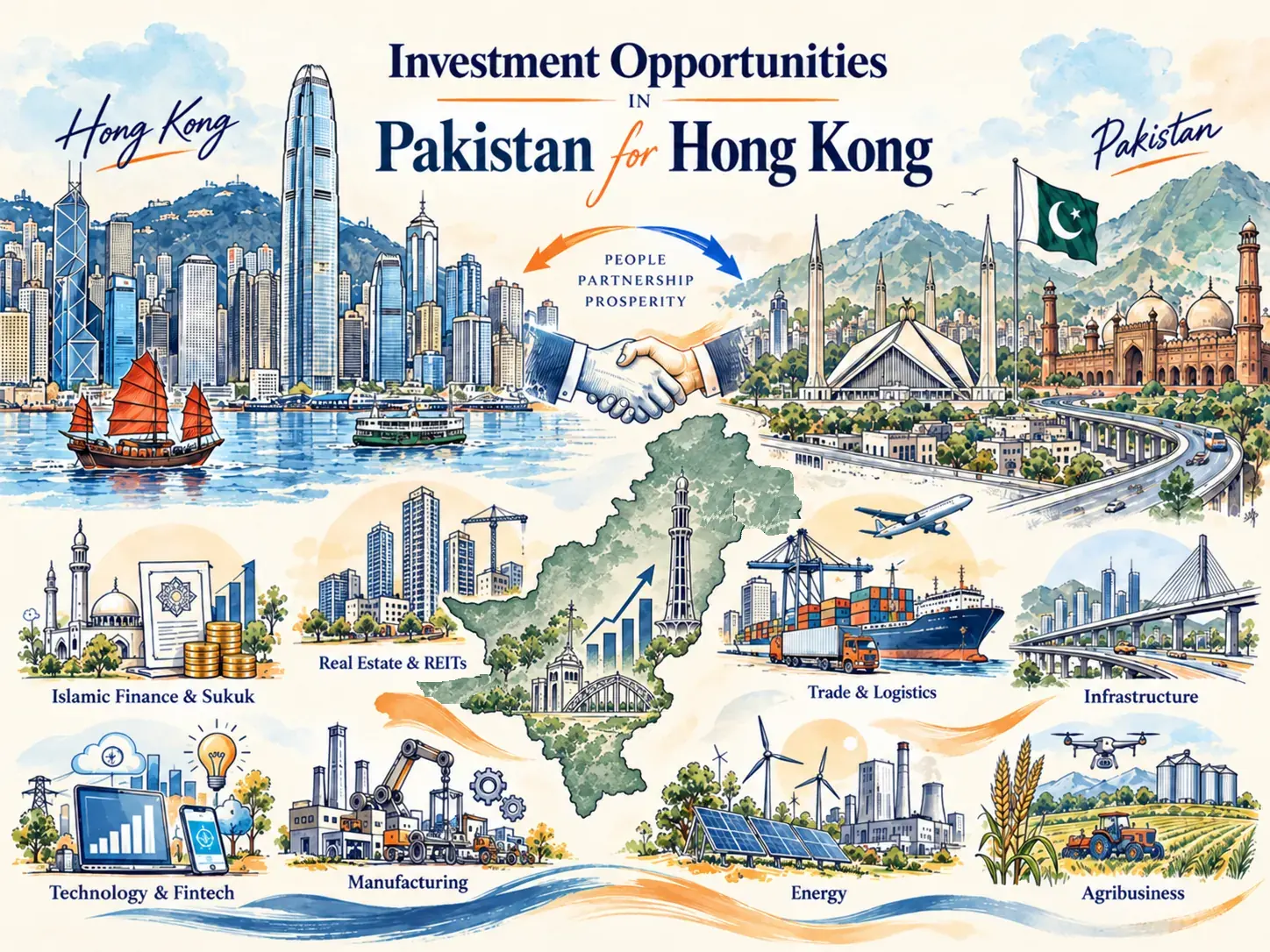
- Sukuk: Government and corporate securities structured around permissible assets, rights and financial arrangements.
- Islamic investment funds and ETFs: Professionally managed and index-based portfolios offering exposure to Shariah-compliant securities.
- Shariah-compliant REITs: Opportunities for participation in real estate investments through suitable ownership and financing structures.
- Trade and business financing: Murabahah, Ijarah, Musharakah and Mudarabah arrangements supporting trade, equipment acquisition and business development.
These opportunities differ in terms of risk, liquidity, investor participation and regulatory requirements.Hong Kong’s financial institutions could potentially contribute through investment management, transaction structuring and international distribution of suitable financial instruments.
Its offshore RMB expertise may also create possibilities for future Shariah-compliant foreign-currency financing, subject to commercial feasibility and regulatory requirements.
Although the recent HKMA–BNM cooperation does not establish a direct investment corridor with Pakistan, it provides a timely opportunity to explore such financial connections.
Why Shariah Governance Matters to Investors
In Islamic finance, Shariah compliance is not merely a product designation. It forms an integral part of transaction structuring, regulatory compliance and contractual governance.
Pakistan has established regulatory frameworks for Shariah-compliant companies, securities and Islamic financial institutions. Under the SECP’s Shariah Governance Regulations, 2023, material non-compliance with applicable requirements may lead to restrictions, suspension or cancellation of Shariah-compliance certification. Islamic banking institutions are also subject to the State Bank of Pakistan’s Shariah Governance Framework and its supervisory requirements.
Such consequences can affect a financial product’s regulatory status, contractual expectations, market confidence and investment value, depending on the nature of the non-compliance and applicable law.
This makes professional Shariah advisory services an important component of investment due diligence.
From a Shariah advisory perspective, investors should examine the underlying assets, ownership rights, sources of returns, allocation of financial risks and consistency between contractual documentation and actual implementation.
In Sukuk transactions, particular attention may be required regarding asset ownership, purchase undertakings, trading arrangements and the responsibilities of different contracting parties.
Sound Shariah governance, transparent documentation and commercial viability together provide a stronger foundation for investor confidence.
For Hong Kong investors, these considerations should form part of a broader assessment covering creditworthiness, currency exposure, liquidity, legal enforceability and exit arrangements.
Artificial Intelligence and Investment Analysis
Artificial intelligence could further facilitate cross-border investment by supporting preliminary Shariah screening, company financial analysis, Sukuk documentation review and portfolio monitoring.
For international investors examining unfamiliar markets, such technologies can help reduce information gaps and improve decision-making efficiency.
However, AI should complement rather than replace reliable data, professional financial judgment and qualified Shariah supervision.
An Opportunity Worth Exploring
Hong Kong brings international financial expertise, sophisticated market infrastructure and access to institutional investors. Pakistan offers a substantial Islamic finance market, growing investment products and businesses seeking capital for productive activities.
Combining these strengths could create meaningful opportunities for both financial communities.
For Hong Kong investors, a practical starting point would be to examine suitable Sukuk, Islamic investment funds and business-financing opportunities through regulated financial institutions, supported by proper commercial, legal and Shariah due diligence.
I believe Hong Kong has a promising future in international Islamic finance, and Pakistan deserves serious consideration as a potential investment destination.
The real opportunity lies in connecting international capital with commercially viable and genuinely Shariah-compliant investments that support business development, responsible financing and wider economic prosperity.
References
- HKMA–BNM Bilateral Cooperation Announcement, October 2026
- HKMA — Government Sukuk Issuance Records
- Pakistan Economic Survey 2025–26
- SECP — Shariah Governance Regulations, 2023
- SBP — Shariah Governance Framework for Islamic Banking Institutions
Disclaimer: This article presents the author’s professional analysis for general information and does not constitute investment advice or a recommendation to purchase any financial product.