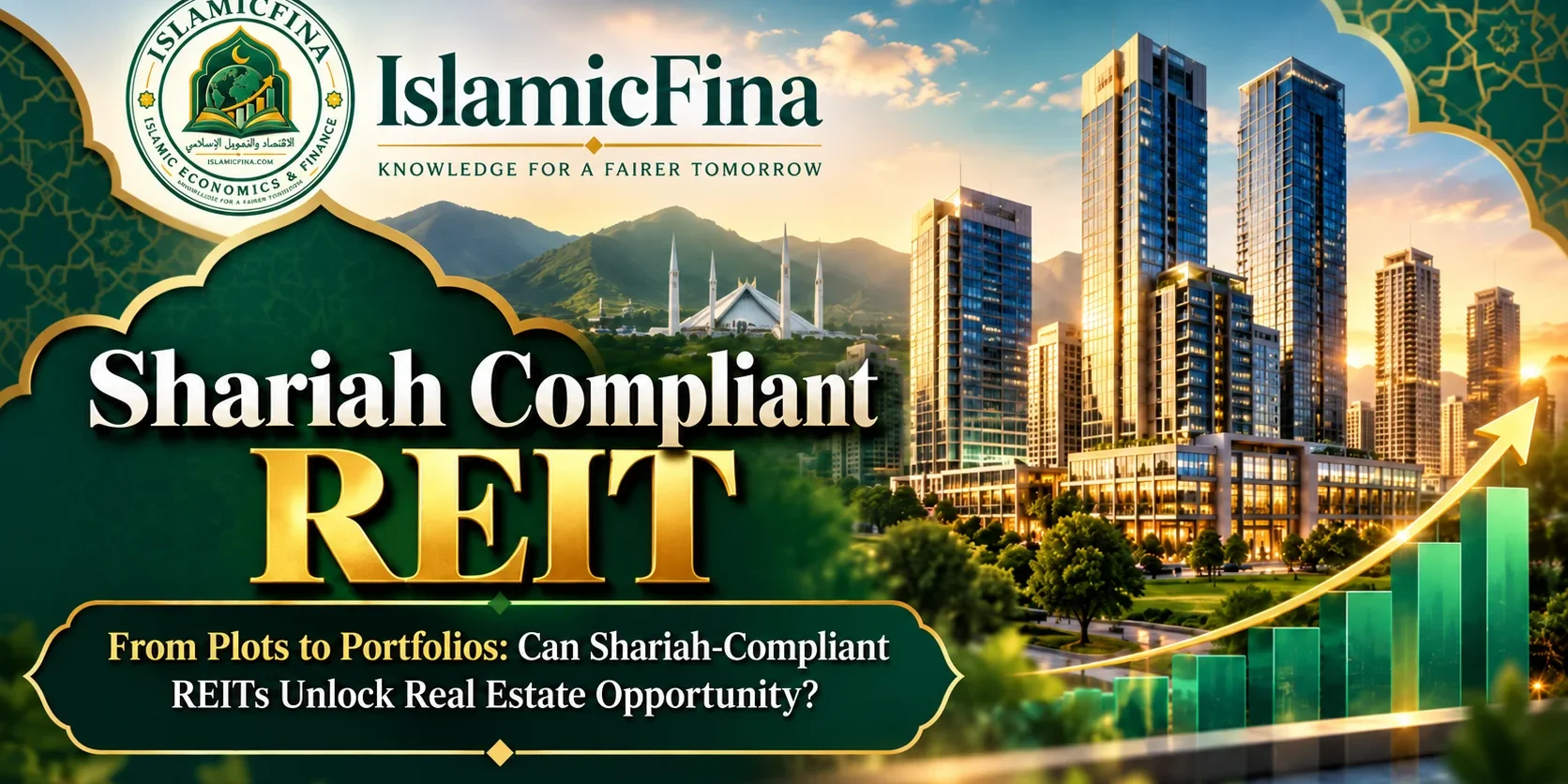
From Plots to Portfolios: Can Shariah-Compliant REITs Unlock Real Estate Opportunity?
Real estate is familiar to almost every Pakistani investor. A plot, a shop, or an apartment is easy to understand—but expensive to purchase, difficult to diversify and sometimes slow to sell. What if investors could participate in professionally managed property without buying an entire building? Real Estate Investment Trusts (REITs) offer precisely that possibility. Their next major opportunity in Pakistan may be to connect regulated property investment with the growing demand for genuinely Shariah-compliant financial products.
What is a REIT?
A Real Estate Investment Trust pools money from investors and deploys it into eligible real estate or property projects. Instead of personally purchasing and managing an asset, an investor purchases units in a scheme. A licensed REIT Management Company (RMC) manages the investment, while a trustee safeguards the scheme’s assets under the applicable framework. Depending on the REIT, returns can arise from collected rent, property development profits or gains on eventual sales. Investors also share exposure to vacant properties, falling valuations and other commercial risks.
Why do investors find REITs attractive?
REITs can make substantial property investments accessible through smaller units, offer exposure to assets that an individual might never purchase alone and shift day-to-day management to professionals. Portfolio diversification, independent valuation, disclosures and—in the case of listed units—access to exchange trading can further strengthen their appeal. But REIT units are not bank deposits: distributions may fluctuate, market prices may differ from underlying property values, and unlisted or closed-end schemes may have limited exit options.
A global industry measured in trillions
REITs are no longer a niche financial experiment. According to Nareit’s global REIT research, 1,021 listed REITs worldwide had a combined equity market capitalization of approximately US$2.04 trillion in 2024, compared with about US$10 billion in 1990. Forty-two countries and regions had adopted REIT frameworks, extending this investment approach across established and emerging markets.
The worldwide totals cover the broader REIT industry, rather than a separately measured conventional-only segment. The message for Pakistan is nonetheless unmistakable: professionally structured real estate has developed into a major capital-market asset class.
Global REITs: From Billions to Trillions
Pakistan: a market taking shape
Pakistan is at an earlier stage, but the direction is encouraging. SECP’s Annual Report 2024 recorded 19 registered REIT schemes with an aggregate fund size of approximately Rs 161.21 billion as of June 2024.
The Pakistan Economic Survey 2025–26 reported 29 registered schemes as of March 31, 2026, and an aggregate fund size of Rs 173.10 billion as of December 31, 2025.
These figures describe the entire registered REIT sector, not exclusively conventional or Shariah-compliant schemes; the scheme-count and fund-size observations also have different dates. More schemes do not automatically mean proportionately more public investment, but they indicate a widening institutional pipeline.
Pakistan’s REIT Pipeline Is Expanding
Could Shariah-compliant REITs be the turning point?
Real estate offers an appealing starting point for Islamic investment because identifiable assets, ownership, leasing and participation in commercial results can be examined directly. Yet a property-backed investment is not automatically Shariah-compliant.
Investors need answers that go beyond a product label: Who genuinely owns the property? Are tenants’ activities permissible? Where are rental receipts and cash reserves placed? Who bears major ownership risks? Does financing avoid interest? Can units be traded under the applicable Shariah rules? And who checks compliance after launch?
Islamic Investing Has a Substantial Capital-Market Presence
Share of Pakistan Stock Exchange market capitalization, not the share of Shariah-compliant REITs.
The same Economic Survey reports that Shariah-compliant securities represented 64% of Pakistan Stock Exchange market capitalization as of March 2026. That is not a forecast of REIT demand, but it demonstrates the importance of Islamic investment in the wider capital market.
For RMCs, these questions are opportunities to design stronger products—not merely administrative hurdles. Clear ownership, carefully screened properties, transparent fees, risk-sharing and continuing Shariah oversight can build confidence among households, Islamic financial institutions and long-term investors.
The opportunity could extend from rental buildings to suitable residential, commercial and healthcare properties, provided each scheme is assessed on its own merits.
SECP is opening the door
Pakistan’s regulator has taken tangible steps to develop the sector. Amendments notified in January 2026 simplified REIT procedures, strengthened governance and brought the framework into closer alignment with Shariah governance requirements.
SECP has also recognized Shariah-compliant REITs through its certification processes and approved the public offering of the Shariah-compliant Signature Residency REIT in January 2026.
Further REIT reforms discussed in September and October 2026 signal continuing interest in expanding public participation; proposals, however, should not be mistaken for rules already in force.
The next opportunity is credibility
Pakistan needs more than property projects repackaged into units. It needs investable real estate products with commercially credible assets, transparent valuation, accountable managers and convincing Shariah governance.
For investors, the attraction is participation without the burdens of direct ownership. For RMCs, it is an opportunity to create differentiated products. For researchers, it opens important questions about ownership, risk, liquidity and investor protection.
Sources & data notes
- Nareit: Global Real Estate Investment.
- SECP Annual Report 2024.
- Pakistan Economic Survey 2025–26.
- SECP REIT reforms, January 2026.
- SECP Signature Residency REIT IPO announcement.
Data note: Global figures measure listed REIT market capitalization; Pakistan figures measure registered REIT schemes and their aggregate fund size. They are not directly comparable. The PSX 64% figure concerns the broader equity market, not REITs alone.